Systems, Automation, and AI Consultancy
Six months working inside your business to map your core workflows across seven areas, identify where automation and AI can save time and increase capacity, and design the connected system that lets your business grow without growing your workload.

6 months
Two three-month blocks with a full review at month three before the second block is committed.
7 business areas
Administration, marketing, sales, operations, finance, support, and management.
BUILD framework
Bespoke, Usable, Intelligent, Leverage, Data. Every system built to this standard.
You own everything
Every map, document, and specification belongs to your business on delivery.
The real cost of broken systems
Your business is leaking time, money, and opportunity every single day.
Around 20 per cent of the revenue opportunity in an established small business is never captured or nurtured. Leads fall through the gaps. Follow-ups do not happen. Clients who would have renewed or referred are never asked. Invoices go out late. Proposals sit in someone's inbox. None of this is because the team is not working hard. It is because the systems are not working at all.
The Systems, Automation, and AI Consultancy is built to close those gaps. Not with a software licence and a training video, but with six months of structured work that maps, builds, and blueprints the operating system your business needs to grow without adding proportional workload.

The scope
Seven areas of your business. Every workflow mapped.
The programme covers every area of the business where systems, automation, and AI can save time, reduce errors, and increase revenue. Nothing is assumed. Every workflow is mapped from first principles before anything is changed.
Administration
Document handling, scheduling, internal communications, and the repetitive coordination tasks that consume time without adding value. Often the area with the fastest automation wins.
Marketing
Lead generation, content production, campaign management, and the data flows between your marketing tools and your CRM. Where AI can identify which content and channels are generating the best-fit enquiries.
Sales
Pipeline management, follow-up sequences, proposal generation, and the handoff from sales to operations. Where automation closes the gaps that lose deals and where AI can identify at-risk opportunities before they go cold.
Operations
Service delivery, project management, supplier coordination, and the workflows that turn a sale into a satisfied client. Where systems failures show up most visibly and where standardisation creates the most capacity.
Finance
Invoicing, payment chasing, expense management, and the data flows between your finance tools and the rest of the business. Where automation reduces errors and where AI can flag cash flow risks before they become problems.
Support and Service
Client queries, complaint handling, renewals, and the ongoing relationship management that determines whether clients stay, refer, and expand. Where AI assistants can handle routine queries and where automation ensures nothing slips through.
Management and Reporting
Performance data, team communication, decision-making, and the management information that tells you whether the business is on track. Where a connected data architecture replaces spreadsheets and gut feel with real-time visibility.
The programme
Three stages. Six months. A business that runs on systems.
The programme is structured in three two-month stages. Each stage has a defined focus, a clear set of activities, and a set of outcomes you can see and measure before the next stage begins.
Months 1–2
Stage 01: Map
Understand the business before touching the technology.
AI laid over a messy process creates a faster mess. The map comes first. Richard works through all seven business areas, mapping every workflow that materially affects revenue, delivery, cash flow, and customer experience. Every step is classified as human-led, automation-led, or AI-assisted, and scored by impact, frequency, effort, and risk. The data and systems audit runs in parallel, documenting what tools hold what data today and where the gaps and duplications are.
You finish this stage with
Months 3–4
Stage 02: Build
Prove it with early wins.
The highest-scoring items from the backlog go live alongside your existing systems. Automated lead capture and follow-up, sales-to-operations handoff checklists, invoice triggers, and service reminders. The first AI assistant is built on your business's own knowledge and launched with strict guardrails. Human-in-the-loop is the default. Your team is trained on everything built, and a one-page AI usage policy puts you in control of how AI is used across the business.
You finish this stage with
Months 5–6
Stage 03: Blueprint
Design the connected system.
With the map drawn and the early wins proving the approach, Stage Three designs the full architecture. A single source of truth for your customer data, the CRM design and data model, the automation trigger map, and an AI insights layer that flags at-risk customers, missed follow-ups, and cross-sell opportunities. The design is platform-independent. Leadnamic NexSys OS is one option, never a requirement. You own every document produced.
You finish this stage with
The framework
Every system built to the BUILD standard.
BUILD is the framework that governs every decision in the programme. It ensures that what gets built is genuinely useful, genuinely used, and genuinely owned by your business.
Bespoke
Every map, automation, and AI assistant is designed around how your business actually works, not a generic template.
Usable
Nothing is built that your team will not use. Adoption is designed in from the start, not bolted on at the end.
Intelligent
AI is applied where it genuinely reduces workload and improves decisions. Where it does not earn its place, it stays out.
Leverage
The goal is more output from the same team, not more tools for the sake of it. Every change is measured against hours recovered.
Data
The system is designed to capture the right information so leaders can see what is working, what is stuck, and where to focus next.
The principles
Six principles that govern every decision in the programme.
Workflow first, AI second
Nothing is automated until it is mapped, simplified, and standardised. Automation of a broken process creates a faster broken process.
Human in the loop by default
Automation handles repeatable logic. People handle judgement, relationships, and sign-off. The default is always human oversight until the data justifies loosening it.
Guardrails from day one
Every AI assistant launches with strict constraints, loosened only when real cases justify it. Your clients and your team deserve to know what the AI can and cannot do.
You own everything
Every map, document, specification, and prototype belongs to your business on delivery. There is no lock-in to Richard, to Ignite Growth, or to any platform.
No platform lock-in
The design is independent of any single vendor. Leadnamic NexSys OS is one option. The blueprint works on any platform you choose.
Data safety throughout
Business-grade AI accounts only. UK and EU data residency. GDPR compliance checked on every automation before it goes live.
This programme is for you if
This programme is not for you if
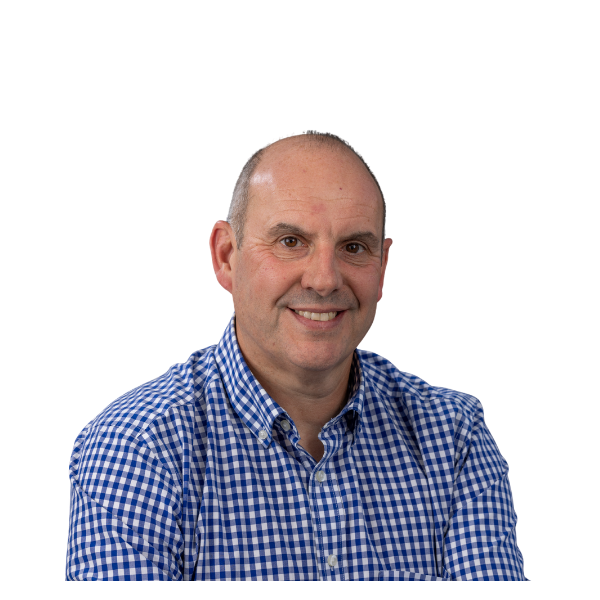
Why Richard
Not a theorist. A practitioner who has done this in real businesses.
Richard Mawer has built eight businesses of his own, two to seven figures. In Remarkable Business Growth, he documents growing his digital agency from £283k to £575k in one year, driven by building a proper business system around a CRM. He is currently delivering this exact programme for a £27m Lincolnshire business across sales, marketing, customer service, and operations, including a guardrailed AI customer service agent and a full CRM and data architecture design.
This is not a framework invented for a course. It is the method Richard has used in his own businesses and is using right now in client businesses. Every principle, every stage, and every deliverable has been tested against the reality of running a growing UK small business.
Investment
Two hours a day recovered across your team will pay for this programme several times over.
Monthly investment
per month, plus VAT
£17,970 plus VAT for the full six months
How you commit
Two three-month blocks of £8,985 plus VAT each. The month-three review is the decision gate. Phase one results are on the table before the second block is confirmed.
Think about this
Two hours per day recovered across you and your team. One plugged revenue leak. One contract renewal that no longer slips through the gap. Any one of those outcomes will pay for this programme several times over in its first year. The question is not whether you can afford to do this. It is whether you can afford not to.
Where it sits in the Ignite Growth suite
Strategy tells you where you are going. Systems get you there. Many clients do the 12-Week Growth Strategy programme first and the systems programme second. Some come straight to systems because that is where the constraint is. Both routes work.
Common questions
Questions about the programme
Ready to find out where you are leaking time and revenue?
Book a free 45-minute Systems Review call.
Richard will walk through the seven business areas with you, identify the two or three workflows leaking the most time or revenue, and tell you honestly whether this programme is right for your business. No obligation. No sales pressure.